Subaru Forester: Hybrid vs petrol
The Forester now comes as a fuel-saving hybrid or the proven boxer petrol, and at the base grade the two are equipped identically. The only real question is whether the hybrid's $3,000 premium is worth it. Here is what the extra money buys, what it costs you, and which is the smarter buy.
The bottom line
At the base grade the Hybrid and the petrol AWD carry the same equipment, so this is a straight powertrain choice. The hybrid costs $3,000 more and saves about $500 a year in fuel, so it takes roughly six years of average driving to pay that back. Buy it for the quieter drive and the long range between fills, not to save money quickly. The petrol stays the pick if you tow, since it pulls 1,800 kg against the hybrid's 1,200 kg.
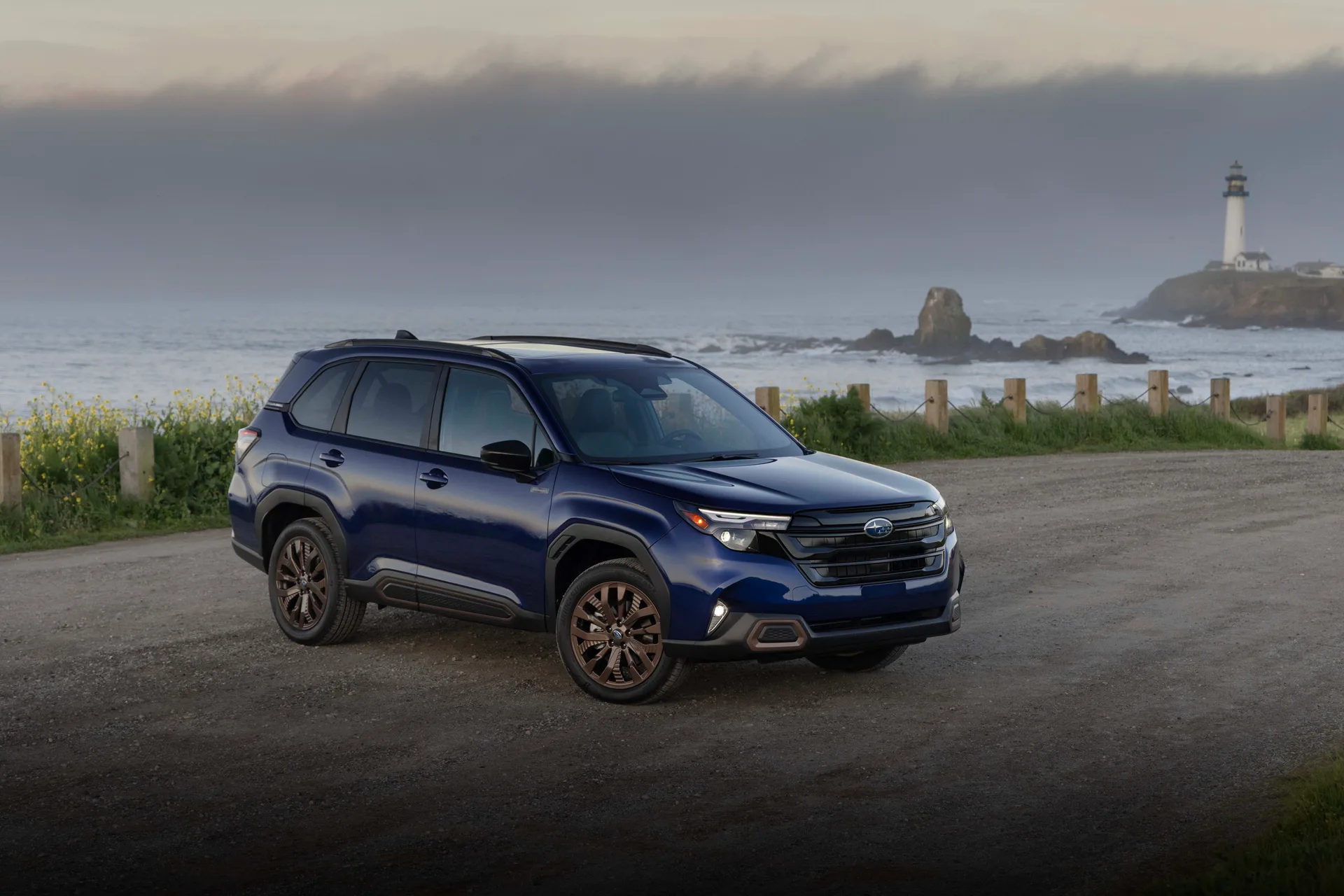
Subaru
Forester Hybrid
From $46,490
Buy the Hybrid if
you want the quieter, smoother drive and the long range between fills, and most of your kilometres are around town where the self-charging hybrid saves the most. It is equipped just like the base petrol, so you give up nothing but $3,000 up front, which the roughly $500 a year fuel saving takes about six years to return. Just do not buy it to tow, since it is capped at 1,200 kg.
View the Hybrid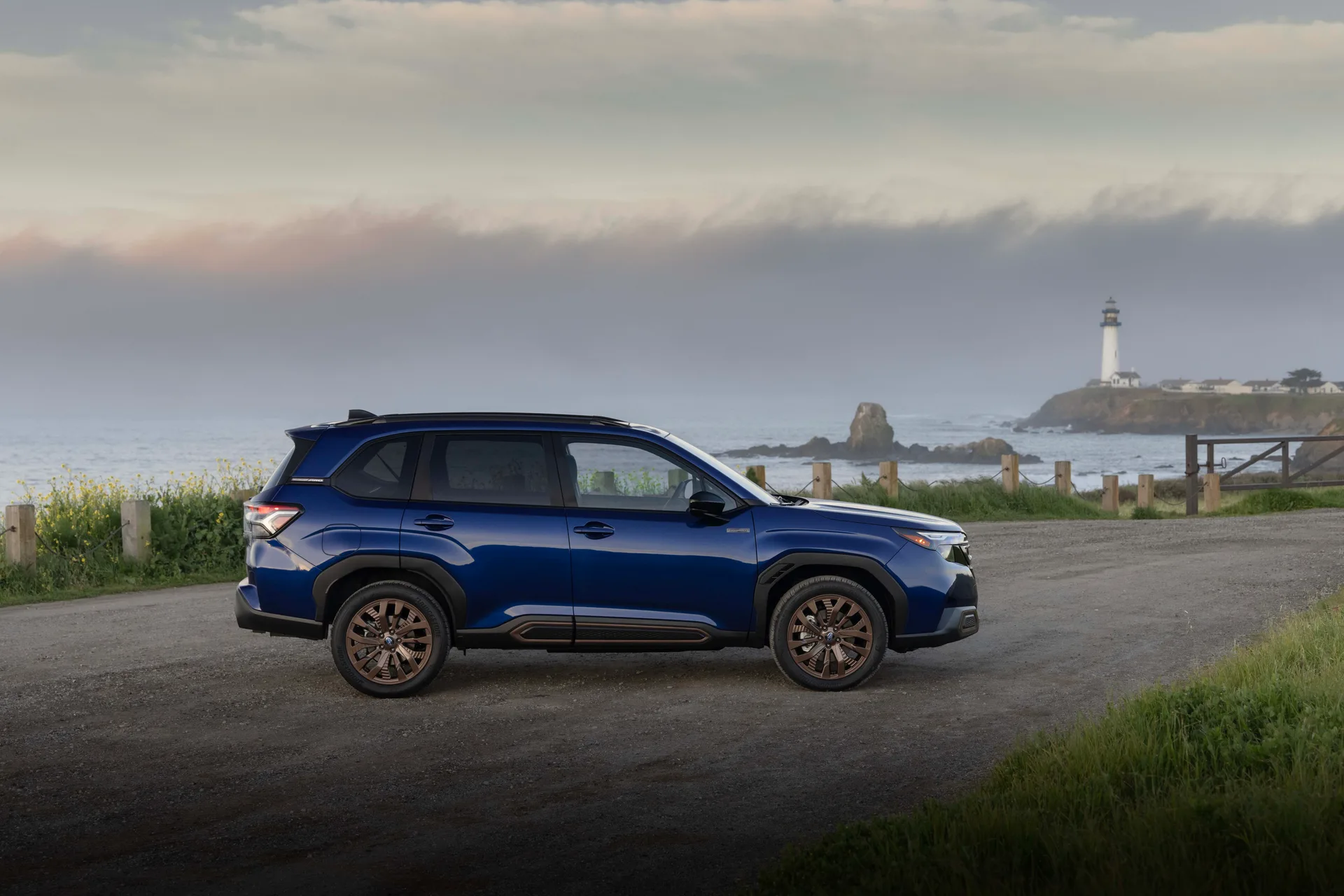
Subaru
Forester AWD
From $43,490
Buy the petrol if
you tow, or you would rather keep the $3,000. It pulls 1,800 kg braked against the hybrid's 1,200, has a slightly bigger boot, and costs no more to service. You give up the hybrid's quieter town manners and its long range between fills, but on our numbers the fuel saving would take about six years to pay for the hybrid anyway.
View the AWDThe numbers
| Hybrid | AWD | |
|---|---|---|
| Starting price | $46,490 | $43,490 |
| Engine | 2.5L e-Boxer hybrid, 145kW | 2.5L boxer petrol, 136kW |
| Fuel use | 6.2 L/100km | 7.9 L/100km |
| Fuel a year | ~$1,860 | ~$2,370 (about $500 more) |
| Braked towing | 1,200 kg | 1,800 kg |
| Boot space | 484 L | 496 L |
| Battery warranty | 8 years / 160,000km | Not applicable |
| Servicing | Same plan, $2,299 over 5 years | Same plan, $2,299 over 5 years |
Running-cost figures are estimates for comparison only and will vary with your driving, fuel prices and state. They assume 15,000 km a year and petrol at $2.00 a litre. The Forester hybrid is a self-charging hybrid, so it takes no plug and its saving shows up mainly around town, less on the highway. Prices are MRRP.
The verdict
Underneath they are the same Forester, with the same standard all wheel drive, the same EyeSight safety, the same 220mm of ground clearance and the same 5 star ANCAP rating. At the base grade they even carry the same equipment, so unlike some hybrids you are not paying for the powertrain and losing kit at the same time. What splits them is running costs against outright ability.
On fuel the hybrid wins, but slowly. It uses 6.2 L/100km against the petrol's 7.9, which on our assumptions is about $500 a year, and because it is a self-charging hybrid with no plug most of that saving comes in town. Against the $3,000 it adds up front, that is roughly a six year payback, so the case for the hybrid is really the driving experience: it is quieter and smoother around town and covers over 1,000 km between fills. Servicing is identical, and the hybrid adds an 8 year battery warranty.
The petrol answers with the thing the hybrid gives up: towing. It pulls 1,800 kg braked against the hybrid's 1,200 kg, and its boot is a touch larger at 496 litres against 484. If you tow a caravan or a decent trailer the choice is made for you. For everyone else it comes down to whether a quieter, longer legged drive is worth $3,000 you will not get back quickly.
See both grades in full
Both grades live on the one Forester page, where you can switch between them and read the full specs and standard equipment for each.
See the ForesterMore guides
- Toyota RAV4 vs Mazda CX-5Medium SUV
- Hyundai Tucson vs Kia SportageMedium SUV
- Hyundai Kona vs Kia SeltosSmall SUV
- Toyota HiLux vs Mitsubishi TritonDual-cab ute
- Toyota Corolla vs Mazda 3Small car
- Kia Sorento vs Hyundai Santa Fe vs Toyota KlugerSeven-seat SUV
- Ford Ranger vs Toyota HiLuxDual-cab ute
- Ford Ranger vs Mitsubishi TritonDual-cab ute
- Mitsubishi Outlander: petrol vs plug-in hybridMedium SUV
- Subaru Crosstrek: Hybrid L vs 2.0RSmall SUV
Last updated August 2026